Tidbyt
- 3.9
- Rating
- 10.00K
- Installs
- Free
- Price

 Analysis by App-foxy
I like home apps that earn their place by making everyday information easier to notice, not by demanding another screen session. That is the appeal of Tidbyt: it is a House & Home app from Tidbyt, Inc. built around the idea of putting useful information where it can be seen at a glance. The concept is simple, but the quality of the experience depends on how quickly the app responds, how dependable it feels over time, and whether it fits naturally into the way you already use your home.
The app is free to install and suitable for Everyone, which makes it easy to try without turning the decision into a purchase. It has passed the early experimental stage too, having been available since September 2, 2020. At the time of writing, the Android release is version 1.353.94 and requires Android 7.0 or later. Those details matter because this is not an app I would choose only for occasional browsing; its value comes from becoming part of a routine.
How Tidbyt feels in everyday use
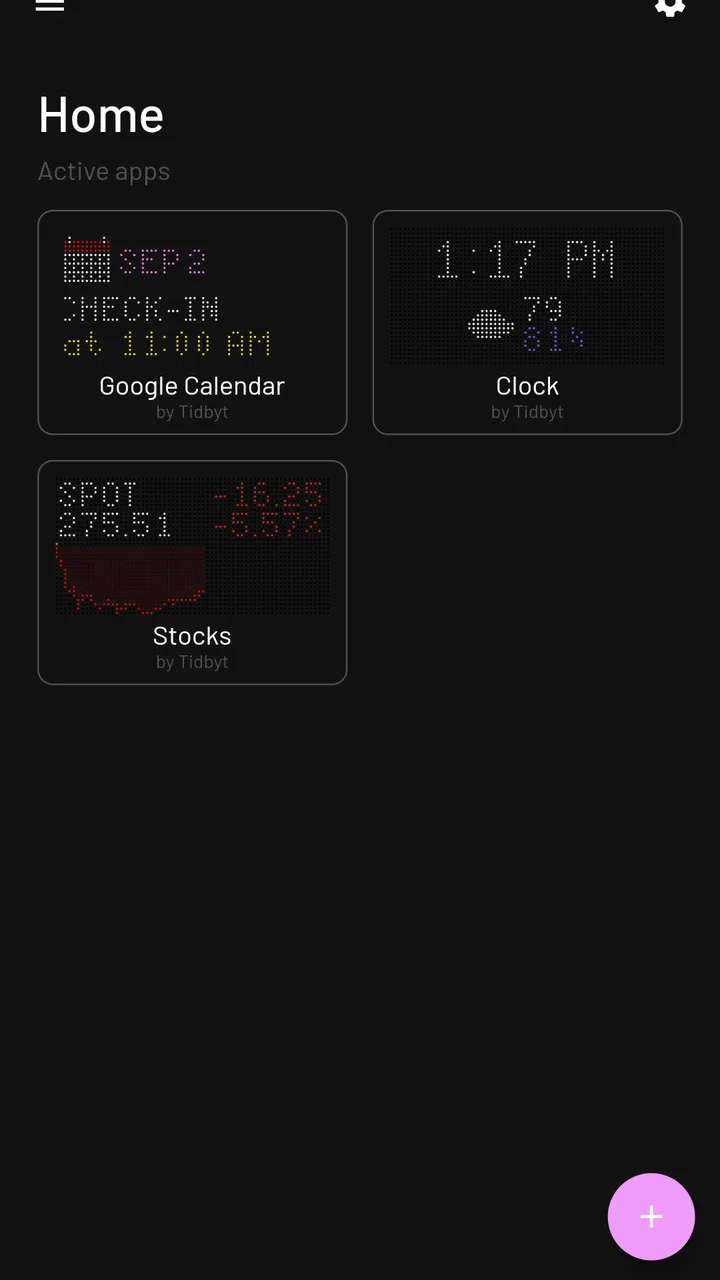
My first impression is that Tidbyt makes more sense as a companion to a physical home display than as a conventional app that you open, scroll through, and close. The phone is the control point, while the useful result is meant to be visible elsewhere. That changes the way I judge it. I am less interested in flashy navigation and more interested in whether setup feels understandable, whether changes appear without unnecessary waiting, and whether the app helps me decide what deserves attention in the room.
You May Also Like

 AccuWeather: Weather Radar
AccuWeather Review: A Quick, Clear Forecast for Everyday Decisions
For everyday plans, the best forecast is the one you can understand quickly. AccuWeather makes rain timing, radar, and local conditions easy to act on, with a few trade-offs.

 Hill Climb Racing
Why Hill Climb Racing Still Turns Crashes Into One More Run
A tiny car, a bumpy hill and one more upgrade: Hill Climb Racing keeps resurfacing because its simple chaos makes every near-miss feel personal.

 AliExpress - Shopping App
AliExpress Makes Global Shopping Feel Personal, but Shoppers Bear the Risk
AliExpress turns a global marketplace into a pocket-sized discovery engine. Its reach is useful, its shopping loop compelling, and its trade-offs easy to miss.

 Lords Mobile: Kingdom Wars
Lords Mobile Is a Kingdom-Building Routine, Not a Quick Match
A case-by-case verdict on the building, battles, device demands, and social commitments that make Lords Mobile rewarding for some players and exhausting for others.

 PDF Scanner app - TapScanner
TapScanner Makes Paperwork Easier to Capture, Check, and Share
TapScanner makes scanning with a phone feel less like a rescue operation and more like a dependable step in getting work done. Its capture tools are useful, though not flawless.

 Block Blast!
 Shows How Much a Puzzle Game Can Leave Out
A quiet grid game shows why puzzle players increasingly value instant clarity, repeatable skill and low-pressure play—and where the genre still needs to catch up.
More From Our News Desk
View All News


For a typical morning, the attraction is obvious. I can imagine checking the display while making coffee instead of reaching for my phone immediately. A quick glance can become part of leaving the house, starting work, or deciding whether I need more time before heading out. The best home technology often works this way: it reduces small interruptions rather than adding another destination to visit.
The real strength is glanceable information that stays in the background. Tidbyt is most convincing when I want awareness without a notification-heavy experience. It is not trying to replace a full calendar, a detailed weather service, or a dedicated smart-home control panel. Instead, it gives the home a quieter information layer.
Speed expectations: quick enough for a glance-based routine
Speed matters here, but not in the same way it does in a game or a video editor. I do not need complex screens to render instantly. I need the app to feel responsive when I am configuring the experience, and I need updates to avoid making the display feel stale. In that role, the important question is whether the app gets out of my way.
Because the purpose is glanceable information, a short delay during setup is easier to tolerate than a confusing delay with no visible explanation. I would rather see a clear state and know that a change is being processed than repeatedly tap controls because I am unsure whether the first action worked. This is a useful mindset when testing it: make one change, give the system a moment, then check the result instead of treating every pause as a failure.
The app should also be judged by how often I need to open it. If I am constantly returning to the phone to refresh, correct, or reconfigure something, the convenience disappears. If the display can remain useful while the phone stays in my pocket, the experience feels much more efficient than a standard information app.
One practical tip is to decide in advance what information deserves permanent visibility. A crowded setup can make every item less useful, especially when the display is viewed from across a room. I found the concept works best when I treat the available attention as limited: choose the few things I genuinely check during the day, rather than trying to recreate the entire phone on the wall or shelf.
Heavy-use moments: where the concept earns its space
The busiest periods are not necessarily moments when the app itself is doing complicated work. They are moments when the household is changing quickly: the start of a workday, a rushed school morning, the transition from work to evening, or a weekend when people are moving in and out. Those are the situations in which a glanceable display can be more useful than opening separate apps.
Imagine working from home while trying to avoid unnecessary phone checks. A visible home display can act as a low-friction reminder of the information I want nearby, while the phone remains available for tasks that actually need interaction. That separation is valuable. It keeps quick awareness in the room and reserves the phone for deeper actions.
Another realistic use is a shared household. A phone is personal, but something placed in a common area can make information available to more than one person. The trade-off is that the chosen content has to be broadly useful. If one person controls everything for their own needs, the display may become background decoration for everyone else. I would involve the household in deciding what stays visible, then change the arrangement only when it stops helping.
Heavy use can also expose a weakness in any connected home product: the experience depends on more than the app screen. The phone, the display, the network path, and the chosen information all contribute to the final result. If something appears late or fails to update, it may not be obvious which part is responsible. That is why I would avoid making Tidbyt the only place for urgent information. It is better for awareness than for anything that must be acted on immediately.
The optional purchase model is worth considering here. The app is free, with in-app purchases priced at $4.99 per item. That lets a curious user begin without paying, but it also means the total cost can depend on which extras become important to the way the display is used. I would start with the free experience, decide whether the habit actually forms, and only then consider an individual purchase. That is more sensible than buying several items before knowing whether the display will remain useful after the novelty fades.
Reliability: separating a temporary hiccup from a bad fit
Reliability is especially important for a passive home display. When an app is used actively, I can often notice a problem immediately and try again. With Tidbyt, I may not look at it until I need the information. A quiet failure can therefore be more frustrating than an obvious error.
My approach would be to check the complete chain before blaming the app. If a change does not appear, I would first confirm that the phone is connected, then check the physical display and the home connection, and finally reopen the app only if the problem persists. This simple sequence avoids wasting time repeatedly pressing the same control. It also helps identify whether the issue is a one-off interruption or a pattern.
Recovery matters more than perfection. A good household tool should let me return to a normal state without rebuilding everything from scratch. I would pay attention to whether the app remembers the arrangement I chose, whether reconnecting is understandable, and whether a failed update leaves the previous useful state intact. Those are the details that decide whether I trust a device enough to keep it in a visible room.
The rating gives a useful but modest signal: Tidbyt holds a 3.9 average from 92 ratings, alongside 53 written reviews. I would read that as evidence of a mixed real-world experience rather than a reason to dismiss the app. A connected home product can be excellent for one setup and frustrating for another because the surrounding hardware, network, and expectations differ. The rating makes me more inclined to test it patiently before committing to a central role in the home.
Its reach is also meaningful without being overwhelming. Tidbyt has more than 10K installs, enough to show that the idea has found an audience while still feeling more specialized than a mass-market weather or calendar app. That fits my impression: this is for people who want a particular kind of home information experience, not for everyone who owns an Android phone.
Device constraints and the cost of constant visibility
The minimum Android requirement is Android 7.0, so compatibility should be comfortable for many older devices. Still, compatibility is only the first question. The more important issue is whether the phone is being used as a controller for a dedicated display and whether that arrangement makes sense in the available space.
I would not install this expecting it to transform an ordinary phone into a complete smart-home dashboard. The concept depends on having a suitable place for information to be seen. A display hidden behind a monitor, placed at an awkward angle, or located in a room nobody uses will not become valuable simply because the app is installed. Before downloading, I would choose the viewing location first. If I cannot name the moment and place where I will look at it, I may be buying into an idea rather than solving a real problem.
There is also a resource trade-off that is easy to overlook. An app that controls a home display may not need to be open constantly, but connected devices still create expectations about background communication and availability. I would avoid leaving the app running unnecessarily if I only need it for occasional changes. That is a small habit, yet it keeps the phone from becoming part of the clutter the app is meant to reduce.
For an older or less capable Android phone, I would keep the evaluation practical: can the app open reliably, can I make changes without repeated retries, and does the phone remain comfortable for normal use afterward? I would not assume that a simple-looking home app has no impact at all, but I also would not treat it like a demanding game. Its workload is likely to feel light during ordinary control tasks, while the connected setup remains the bigger source of possible friction.
Privacy and attention are device constraints in a broader sense. A display in a shared room should show information that everyone is comfortable seeing. The convenience of public visibility can become a drawback if the selected content is too personal or too distracting. I would keep the common display focused on household-level information and leave private details on the phone.
Who will appreciate it, and who should skip it
I would recommend Tidbyt to someone who enjoys small improvements to the home environment and likes information presented without constant phone interaction. It is a good match for a person who has a dedicated viewing spot, is willing to spend a little time choosing what belongs there, and values ambient awareness more than a long list of controls.
It may also suit a household that wants one shared point of reference. The strongest use case is not showing everything; it is agreeing on a small set of information that helps people make ordinary decisions. That could support routines around leaving, working, or settling into the evening, provided the display is placed where those routines already happen.
I would skip it if I only want a traditional phone app, if I have no suitable display location, or if I need detailed interaction rather than quick visibility. Someone who prefers a fully featured smart-home platform may be happier with an established hub that combines devices, automation, and controls in one place. Someone who only needs weather or calendar details may find a standard app faster and simpler because it does not introduce a separate home-display setup.
I would also skip it if I expect perfect, maintenance-free behavior from every connected device. Tidbyt is more appealing when I accept that occasional checking and adjustment are part of ownership. That does not make it a poor product; it simply places it in the category of home tools that reward a thoughtful setup rather than instant installation.
My performance verdict after weighing the whole experience
Tidbyt feels best when I treat it as a calm information layer for the home, not as another app competing for attention. Its perceived speed should be judged by how little effort it takes to configure and consult, its stability by whether the display remains dependable during ordinary routines, and its recovery by how easily I can restore the setup after an interruption. Those standards are more relevant here than raw app-launch speed.
The free entry point makes experimentation reasonable, while the $4.99-per-item in-app purchases mean I would keep the upgrade path deliberate. I would use the current version, 1.353.94, on a compatible Android device, begin with a single clear routine, and observe whether the display still helps after the first week. That test is more revealing than an enthusiastic first evening because it shows whether the information remains useful once the novelty has gone.
My honest recommendation is conditional but positive. If you already want a dedicated, glanceable home display and prefer quiet awareness to repeated phone checks, Tidbyt has a clear reason to exist. If you are looking for a universal smart-home command center or a replacement for detailed mobile apps, it is probably the wrong tool. Choose it for the habit it can create, not merely for the possibility of displaying more information.
That is ultimately where I land: Tidbyt is a focused House & Home app with a thoughtful premise, a manageable way to try it, and enough connected-device dependence to deserve a careful setup. I would recommend starting small, keeping shared information genuinely useful, and treating reliability checks as part of the initial installation rather than an emergency response. Used that way, it can make a room feel more informed without making daily life feel more digital.
FAQs for Tidbyt
01What is Tidbyt, and what can I use it for?
Tidbyt is a customizable smart display that shows useful information through small, colorful pixel-art animations. After connecting the display to the Tidbyt app, you can choose apps for weather, calendars, news, sports scores, transit updates, cryptocurrency prices, reminders, and more. It is designed to provide glanceable information without requiring you to constantly check your phone or computer.
02Does the Tidbyt app require a physical Tidbyt display to work?
Yes, the Tidbyt app is primarily a companion application for Tidbyt hardware. You can install the app and explore its interface, but most of its practical features require a compatible physical display connected to your account. The display also needs power and a Wi-Fi connection, while the app is used for setup, customization, managing installed apps, and changing settings remotely.
03How difficult is it to set up Tidbyt?
Setup is generally straightforward, even for users who are not especially technical. You typically install the mobile app, create or sign in to an account, connect the Tidbyt display to power, and follow the instructions to connect it to Wi-Fi. The process may take longer if your network uses unusual security settings or if the display needs a firmware update.
04What kind of information and integrations can Tidbyt display?
Tidbyt supports a broad selection of display apps and integrations, although availability can change over time. Depending on your location and selected services, you may show weather forecasts, calendars, countdowns, traffic, public transportation, sports results, stock or cryptocurrency information, news, and smart-home data. Some integrations may require additional account permissions or configuration outside the Tidbyt app.
05Is Tidbyt worth buying for everyday use?
Tidbyt is most appealing if you enjoy ambient technology, pixel-art design, and quickly checking information around your home or office. It is not a replacement for a phone, tablet, or full smart display because its screen is intentionally small and its information is limited to selected widgets. The purchase is easier to justify if you value customization, visual charm, and glanceable updates.
Pros
- Clear pixel-art display makes information easy to glance at.
- Supports custom apps for weather
- calendars
- sports
- and more.
- Automatic updates keep connected widgets current without manual checks.
- Compact design fits well on desks
- shelves
- and bedside tables.
- Community-made widgets add variety beyond the default experiences.
Cons
- Requires a separate Tidbyt device
- increasing the overall cost.
- Many useful widgets depend on an always-on internet connection.
- Pixel display limits the amount of text and detail shown at once.
- Setup and customization may feel complex for users new to smart devices.
- Some advanced integrations require technical knowledge or third-party services.

Tidbyt
Gallery